
What the Updated Food Guidelines (US and Canada) Mean For You
Jan 08, 2026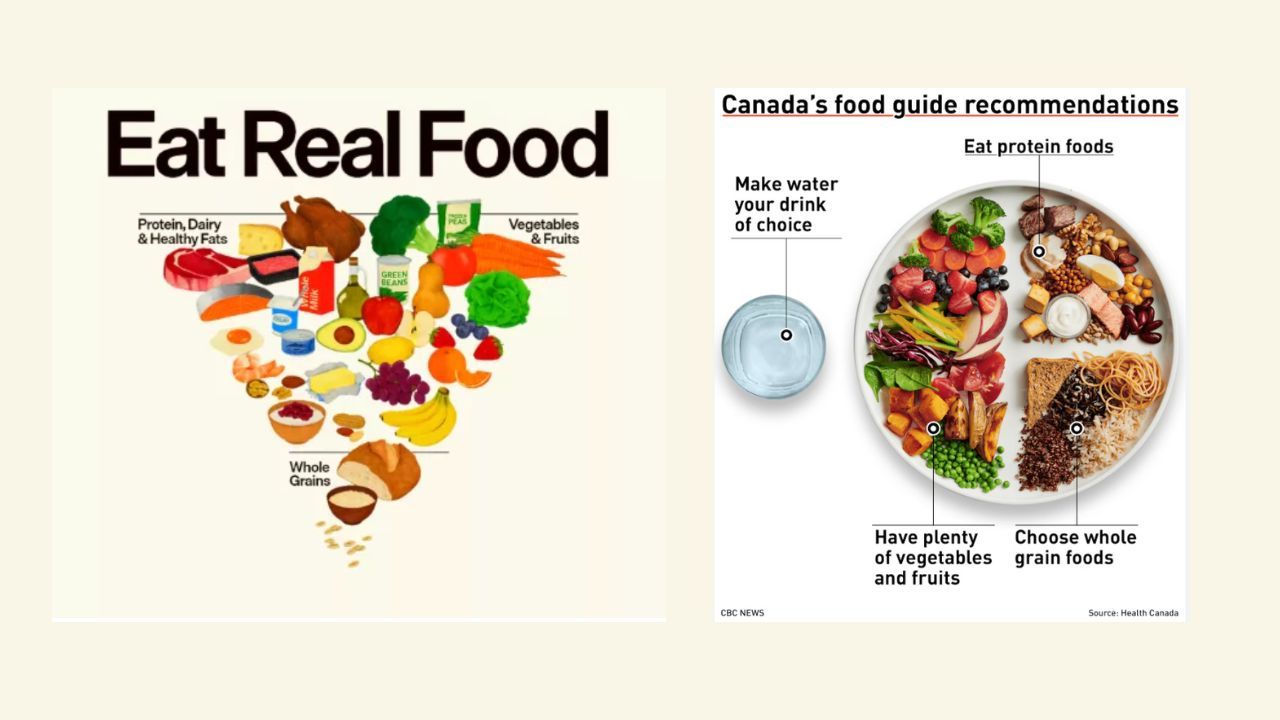
In 2019, Canada updated it's national food guidelines to reflect the Harvard Healthy Plate recommendations, promising additional changes by 2024 that are still yet to come. In January 2025, the US turned the 1992 food pyramid on its head with the first major update in years.
There are mixed reviews. Some people are calling it radical while organizations like the American Heart Association is saying it's a very good (and necessary) change.
All of this is very confusing when learning how to eat to support your autoimmune disease and those you care about.
Everything you've been taught has been suddenly (and literally) turned upside down or rearranged on your plate. It flies in the face of years of nutrition recommendations at school, in the doctor's office, at the hospitals and at home while trying to teach your family (and yourself) healthy food habits that stick. There are also the economic concerns ... how can I afford this while paying for medications, housing costs, life?!? And practical concerns ... how can I get my picky eaters to eat this way?
From a pure general health perspective, neither are perfect AND they are both a step in the right direction (two things can be true at the same time). I'm a big believer that for every problem there is always a solution, so here are my thoughts as a nutritionist who specializes in autoimmunity on what the Canadian and new US food guidelines mean for you.
Customization
There is no way an organization or professional can formulate an eating template for millions of people, just like there is not just "one" eating plan for rheumatic disease, IBD, hashimoto's, heart disease or whatever medical condition you are living with. Success in health always comes down what is right for your body based on your health history, symptoms and what you can realistically sustain so that you experience health benefits (immediate and long term). This approach is taken with medicine (two people with the same condition may require 2 different medications), so it makes sense when you apply this food.
Most of my private and membership clients react to nightshades, dairy, gluten or grains. Some are sensitive to eggs, seeds or nuts. Some have food allergies. Some have histamine considerations. Some can only eat cooked vegetables. Others thrive with raw. Some do well with red meat. Others feel amazing with plant protein. There are also cultural and religious considerations.
The point being, no matter your diagnosis, keep in mind these are guidelines only and you will feel best with a custom plan that takes into account your specific immune, hormone, digestive and metabolic profile. I see this over and over with clients and members that I support with this approach. Speak to someone who is trained in this for the best possible outcomes.
Affordability
I also hear from many people that "eating healthy is expensive" in both Canada and the US. Some will argue that the cost of being sick is higher, however, that's moot to me. I'd rather focus on solutions for affordability versus guilt shaming.
It's 100% possible to eat healthy on a budget. In fact, I was interviewed by the Globe and Mail (Canada's #1 national newspaper) on how to do so in 2024.
Frozen foods are an easy way to increase produce and fruit (steamed, roasted, stewed, blended). They are picked at prime ripeness and flash frozen (I do this). Bulk or sale shopping is another money saving tip (I do this). Certain cuts and types of animal meats and fish are more affordable than others (I do this), AND shopping with the seasons is another money saving option (I also do this).
I have money saving tips for all my clients, including my costco and discount store shopping list, which can help save month after month. I encourage you to do the same ... split with your neighbour, get in the habit of batch cooking and freezing for future meals, buy fresh fruit and veg on sale and in season. When I lived in France, we didn't have access to the massive supermarkets and would eat the "fruit and veg of the month" as we rolled with the seasons.
You can absolutely do this in a way that makes sense for your budget and health goals.
Do grains cause inflammation? Why have they been reduced?
Grain production and grain-based food products are a major industry in North America. Grains includes whole wheat, corn (corn is a pseudo grain), rice and all the varieties under this umbrella (rye, quinoa, kasha, etc.).
Previous food guidelines recommended 6 to 11 servings of grains per day. For perspective, one serving equals 1 piece of bread, 10 crackers, 1/4 to 1/2 cup cooked pasta, rice, oats, or 1/3 cup cereal. Recommendations in Canada are now1/4 of your plate or now 2-4 servings total per day for the new US guidelines.
Why this massive shift?
The problem with grains and North American meals is that they are often the main event with breakfast, lunch, dinner and snacks ... Even when your intention is to "eat healthy" (sandwiches, toast, pasta, rice, healthy muffins, cereals, granola, granola bars, vegetarian dishes). By nature of eating so many grain-based meals and snacks, it is only natural to also simultaneously reduce the amount of protein, healthy fats and produce (vegetables and fruit) during those eating windows.
This impacts your body and inflammation in different ways.
First, refined flours, and some grain-based products like rice or instant oatmeal that aren't combined with adequate protein, healthy fats and produce, can break down very quickly into sugar. You get a spike in your blood sugar (immediate, feel good energy) and then a crash as your blood sugar drops.
This feels like a sudden wave of fatigue 2 hours after lunch or breakfast, your kids having meltdowns when they get home from school, feeling snacky or wanting to graze all day long, which then has you reaching for a bar, muffin or perhaps another small sandwich.
Suddenly you're stuck in this cycle of cravings and sugar spikes/crashes, which contributes to increased physiological stress, insulin resistance and metabolic chaos (in addition to the inflammation caused by your autoimmune disease). Adding fuel to fire, the body will turn excesses sugars (sugars it can't shuttle into cells) into triglycerides. Now there are cholesterol and weight concerns.
Now, there is truth to the fact that growing kids and athletes require higher amounts of starch (grains or root vegetables) to meet their energy needs AND there are certainly ways to do so. When I had my autoimmune-kids program, we spent a lot of time on this. AND I have some clients who absolutely need to include grains in their diet when following a pseudo-vegetarian approach.
The point with the updated food guidelines is that grains should not be prioritized at the expense of protein, healthy fats and fibre-rich vegetables and fruit, which all deliver the nutrients the body needs for better immune and hormone regulation (insulin is a hormone), muscle repair, good gut health and a steady supply of feel-good energy.
For my autoimmune clients, I recommend only small amounts of gluten free grains. Many of my private and membership clients feel substantially better when avoiding grains for the majority of their meals (energy, digestion and joints improve). Instead, we lean into nightshade free root vegetables and squashes as a starch source, which are lower glycemic, high in fibre and offer a variety of vitamins and minerals.
Does this mean you "have" to give up granola, breads, bars, pasta, muffins or cookies? No. There are absolutely ways to incorporate these things into an autoimmune friendly diet:
- No sugar, raw granola (Museli)
- Quinoa or bean pasta
- GF sourdough or oat bread
- Almond or seed crackers'
- Oat or almond flour muffins, cookies or pancakes
What about heathy fats and things like butter?
Healthy fats are a source of antioxidants and help regulate hormones while fighting inflammation. Healthy fats (from an autoimmune perspective) include things like olive oil, nuts and seeds, fats found in certain fish and even certain types of animal meat.
When it comes to autoimmune disease, research indicates most people are deficient in Omega 3s. This is due to #1 not eating enough Omega 3 rich foods (fish, grassfed beef, offal, nuts, seeds, seaweed) and #2 having too many polyunsaturated plant based oils in their diet, which actually lends to more inflammation, not less. If you didn't know, the ratio of Omega 6: Omega 3 are extremely important for managing inflammation and many plant-based oils breakdown quickly with heat, which leads to increased free radicals in food. Foods like butter or ghee, avocado oil, coconut oil have a higher smoke point and are much better options for cooking.
In both the US and Canadian guidelines, there doesn't seem to be a consensus around the quantity of healthy fats or how a person should use fat to prepare meals in a truly heart-smart way. I'm sure more details will come as this information has been available for decades and was a key part of my professional training.
Of course, if a person has heart disease, they shouldn't jump from eating a giant plate of whole grain pasta three nights a week to instead eating a giant ribeye steak smoothered in a butter cream sauce. We need some common sense and that's a discussion for your health professional. However, once you know your full health profile and which foods are best for your body and health goals (immediate and long term), there will undoubtedly be more room for these foods as a nutrient dense option that also provides a little bit of pleasure.
You see, fat also equals flavour. It increases satiety (you're fuller faster by eating less). The 80s was the era of "low-fat everything" which ultimately led to mass produced (and marketing pushed) low fat products needing extra added sugar to fill in the gap of the missing fat.
When it comes to healthy fats, I believe highlighting the nutritional benefits is a good thing.
How much protein is truly enough?
The natural health industry has gone a little protein crazy with recommendations upwards of 1g per pound for weight loss. I personally feel that is too high, yet, previous recommendations were too low (0.8g per kilo). The new US recommendations are now in line with what I have been recommending for my clients with autoimmunity for years ... 1.2 to 1.5g per kilo.
Protein is essential for cellular repair and recovery. It's the lego of our body (provides structure) and backbone of neurotransmitters and hormones.
The type of protein that is best for a person really depends on the person, health profile and tolerances. For autoimmunity, offal, fish, grassfed beef, lamb or game, followed by poultry, eggs, whole-form plant protein like legumes and beans are recommended with an individualized approach.
I find that many of my clients and members struggle with this increase, so a lot of our time is spent on finding ways to increase protein sources for breakfast, lunch and dinner in ways they enjoy, that doesn't feel heavy. When they do so, they feel substantially better. In fact, last month, one of our members added back animal meat to her diet for the first time in decades. She was surprised how she much she enjoyed it and how better she felt.
Of the two food guidelines, I personally prefer the Canadian visuals for protein for autoimmune and inflammation considerations. When protein is 1/4 to 1/3 of your plate for all three meals, you'll be assured that you'll be close to your metabolic target.
What to do with this information?
If you're looking for customized support for your current diet and your autoimmune-related health goals, there are 3 ways you can get started:
- Book a complimentary call with me to discuss your needs >> CLICK HERE
- Sign up for priority notification for my affordable monthly membership which creates custom plans for our students (we take 10 students a month). We have been following these guidelines (and others) for autoimmune support for years and have all the tools to support you (recipes, cooking classes + customization) >> CLICK HERE
- Sign up for my upcoming masterclass discussing Autoimmune Essentials for your diet and lifestyle plan >> CLICK HERE
Additional Bond With Health Articles:
- Omega 3s: https://www.bondwithhealth.com/blog/omega3s
- Grocery Shopping On A Budget: https://www.bondwithhealth.com/blog/grocery-shopping-tips-to-eat-healthy-and-save-money
- My Favourite Anti-Inflammatory Diets For Autoimmune: https://www.bondwithhealth.com/blog/vanessas-favourite-diets
References:
Canadian Food Guidelines: https://food-guide.canada.ca/en
US Food Guidelines: https://realfood.gov
Increased consumption of refined flours and type 2 diabetes: https://ajcn.nutrition.org/article/S0002-9165(22)03918-1/fulltext
Grains and autoimmune: https://rheumatologistoncall.com/2023/07/04/8-worst-foods-autoimmune-disease/
Dietary wheat in autoimmunity: https://pmc.ncbi.nlm.nih.gov/articles/PMC3705319/
Oxidation of plant oils: https://www.sciencedirect.com/science/article/pii/S2590157525003888#:~:text=(Indiarto%20and%20Qonit%2C%202020a%2C,et%20al.%2C%202023).
Omega 3s and autoimmunity: https://www.sciencedirect.com/science/article/pii/S1568997224001423


